

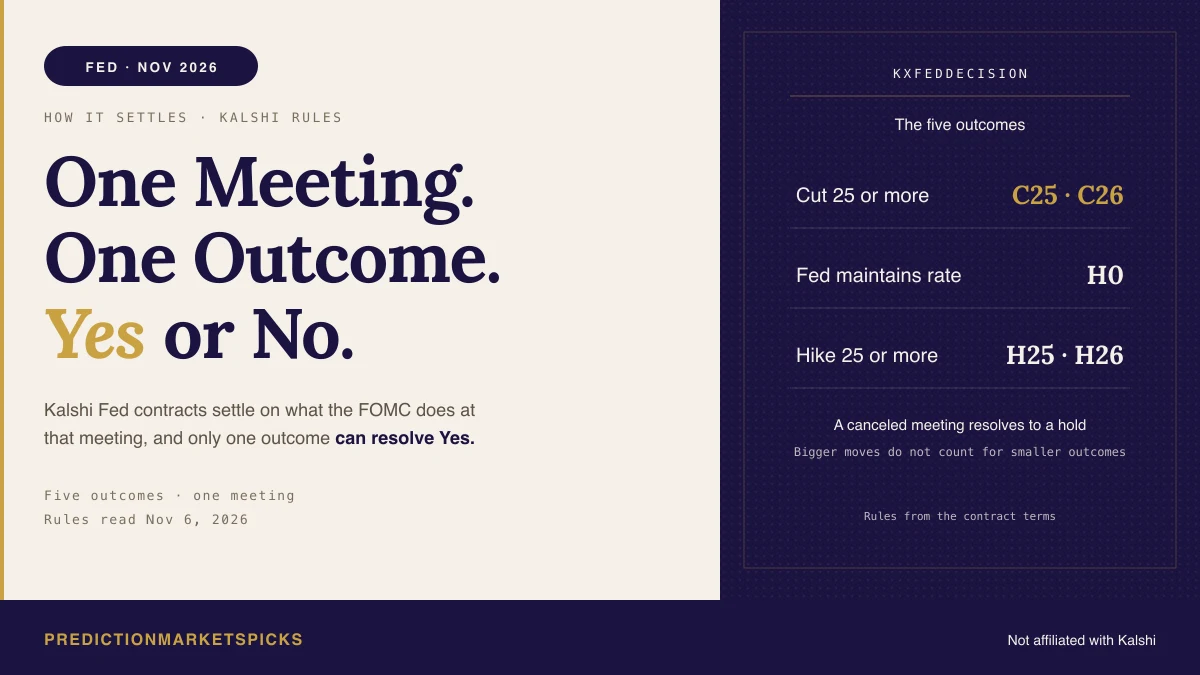
A Kalshi Fed decision contract settles on one thing: what the FOMC does at that meeting. The rule is short, but three details in it matter, and each one has caught traders out. Everything here comes from the contract terms on Kalshi's December 2026 market, read on Nov. 6, 2026.
The five outcomes of a Kalshi Fed market
Each meeting is a set of mutually exclusive outcomes, and at most one resolves Yes:
| Outcome | Ticker ending | What it means |
|---|---|---|
| Cut more than 25 bps | C26 | A cut larger than a quarter point |
| Cut 25 bps | C25 | A quarter-point cut |
| Fed maintains rate | H0 | No change |
| Hike 25 bps | H25 | A quarter-point hike |
| Hike more than 25 bps | H26 | A hike larger than a quarter point |
Three details in Kalshi's Fed rules
A bigger move doesn't count for the smaller outcome. Kalshi's own example: a 50-basis-point hike resolves the larger-hike outcome to Yes and "Hike 25 bps" to No. If you hold the quarter-point contract and the Fed goes bigger, you lose.
A canceled meeting is a hold. If the scheduled meeting is canceled and doesn't take place on its date, "Fed maintains rate" resolves to Yes and everything else resolves to No.
The market closes just before the decision. The December contract closes at 1:59 PM ET on Dec. 9, a minute ahead of the scheduled statement.
Two Fed series, one question
Kalshi lists two families. KXFEDDECISION is the one above: the decision at a single meeting. KXFED prices the level of the rate after a meeting, which makes its strikes cumulative. Read at the same moment, they agree. A number from one and a number from the other taken an hour apart will not, and the next piece covers why that matters when you compare venues.
Before you price a Fed contract
Every outcome pays $1 or $0, so the price reads as an implied probability. Fees change the math at the margin: the Kalshi fee calculator gives the exact number, and our EV walk-through shows what it does to a position. The live odds are on the Fed rate tracker.
Trade responsibly.